
Next.js Custom SEO — A scalable, SEO-ready web foundation
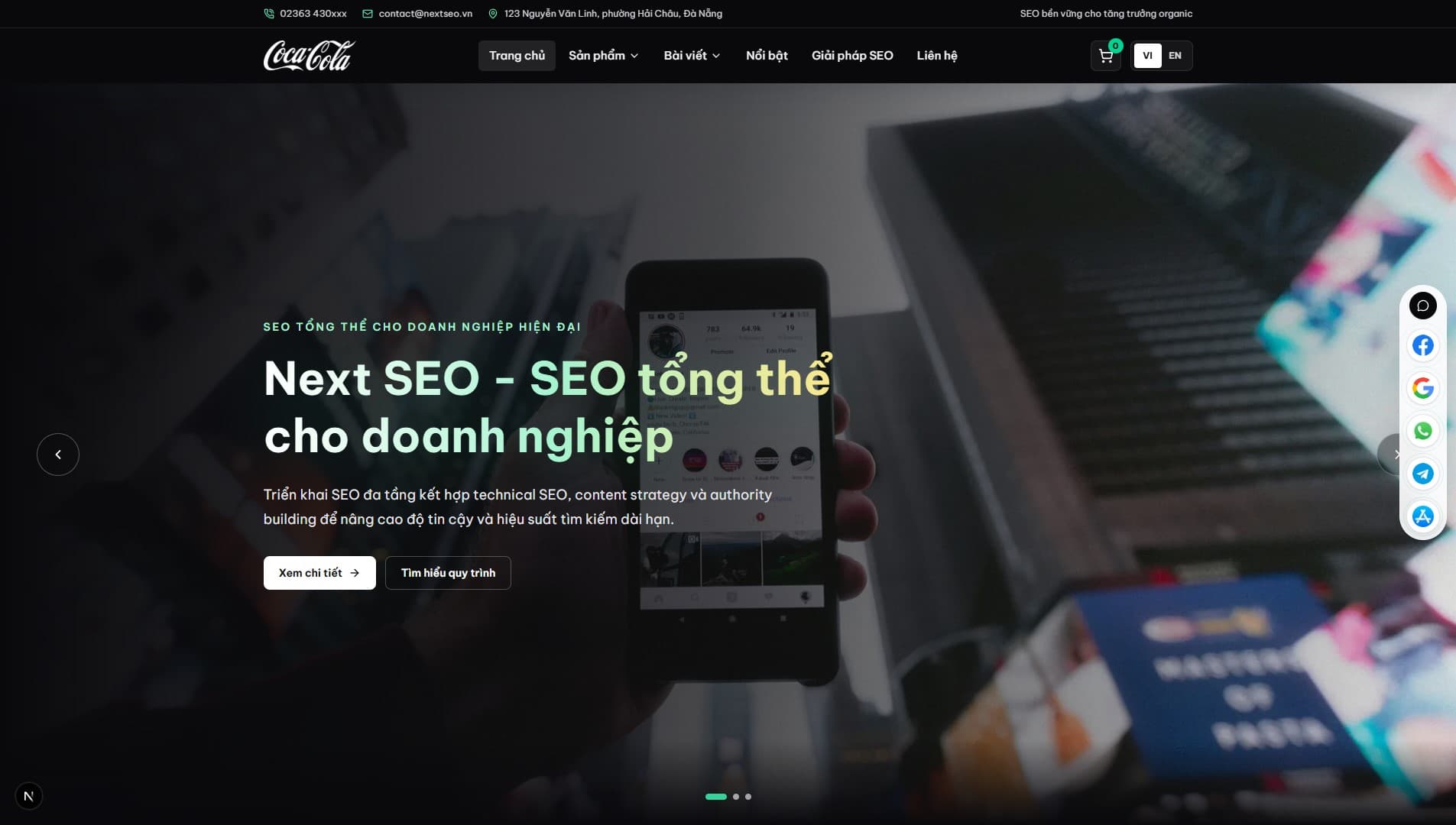
Next.js Custom SEO is built around one goal: ship websites with solid technical SEO, comfortable editorial workflows, and a codebase you can reuse and extend across projects—without reinventing the CMS every time.
Why technical SEO is first-class
The App Router is used to drive dynamic metadata per page, locale, and content type—not a single static title sitewide. URLs, bilingual slugs, and SEO-facing data flow through clear service and repository layers, which keeps complexity manageable as the product grows.
Sitemap automation
A dedicated sitemap.js aggregates important URL groups (static routes, categories, article types per configuration, multiple locales) so crawlers can discover what you intend to index. Focus on content and positioning—the plumbing for “tell Google what exists” is standardized in one place.
Localization-ready
Vietnamese and English are supported across core fields (titles, descriptions, body content), enabling international SEO and bilingual branding without duplicating routing logic or APIs.
Modular admin & content modeling
Admin features are split into focused managers (articles, categories, sliders, content blocks, sections) while sharing consistent UX and API patterns. You can toggle fields, clone patterns for new modules, or extend validation without collapsing the architecture.
- Articles / catalog-style content: slugs, multi-level categories, rich text, imagery, visibility flags.
- Content blocks: sliders, logos, social chips—great for marketing surfaces.
- Content sections: longer editorial zones such as introductions or feature showcases.
Scaling teams & code
MongoDB with Mongoose, Next.js route handlers, and a repository → service → UI split help new engineers onboard faster and reduce merge friction. As traffic or article volume grows, you optimize queries, caching, and editorial workflow—not rebuild the CMS from scratch.
“Great SEO foundations are not only meta tags—they’re clear URLs, structured data ownership, capable admins, and a codebase where new features ship safely.”
In short: use this stack to launch faster, keep technical SEO honest, and grow reusable modules across clients—ideal for agencies, marketing SaaS, or content-heavy brands.